

Tool Restoration
A 173 Short
Not every restoration needs to look brand new, sometimes the goal is simply to put a great old tool back to work.
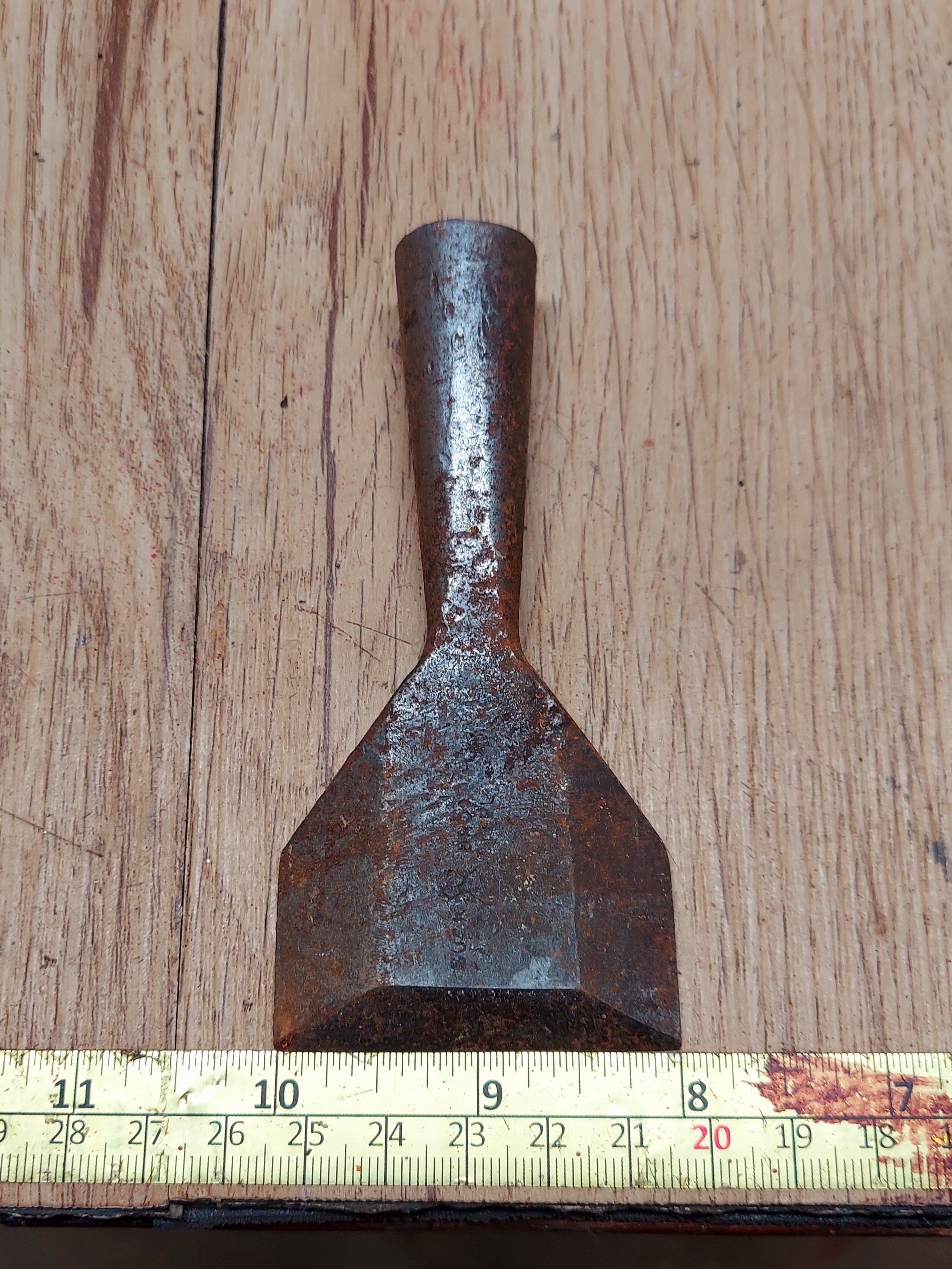
Here's a quick post for you. As I've mentioned a few weeks ago, I inherited a colleague's grandfather's tool boxes. It's been a treasure trove of quality, old-school tools in search of a little bit of love. In this case it's a chisel. I plan on using this chisel for coarse work so I'm not restoring this tool to a new condition, I'm just...well...you'll see!

An Old Chisel Worth Saving
Well, much like a hammer, the chisel is a pretty basic tool. Of course one can fancy up a handle, make it out of just about anything I suppose, and use exotic metals for the chisel itself.

A Brief History of Buck Brothers
One of the most interesting things that I have uncovered is where the Buck Brothers got their start. On the cover of the 1890 catalog, they point out that they are "Formerly of Sheffield, England," which means a whole lot in the world of tools. But on the 1865 catalog cover (which looks remarkably similar to the 1890 catalog), they state "Formerly in the employ of Messrs. Spear and Jacksons, Wm. Ash and Co., and other First-Class Manufacturers, of Sheffield, England." We know that their grandfather was the manager of the Newbold factory, and that they served their apprenticeships under their father (who probably apprenticed under his father at Newbold) so I guess they learned from some of the best. - Brian Welch, Galoot Central, 2004
The Handle
The handle I inherited from my former boss was in pristine condition. I don't think it had ever been used, and it still had the original varnish on it. But I wanted to change the color, so I spent 3 or 4 minutes scraping it down with a razor blade.

Then I stained it with some Mahogany stain...

I even used it to re-stain the leather on the handle...

And into the oven it went. I baked it at 100 watts for two hours, turning it once in the process.

Assembly and Finishing
Once out of the oven, it was just a matter of driving the handle into the chisel end. It was a near-perfect fit!

After that I applied a couple coats of amber shellac, one of (if not) my favorite finishes.

Its Natural Habitat
And just like that I had a new chisel. As a matter of fact, I think it took me longer to write this post than it took to put this tool all together! And here's the new/old 2# Buck Brothers chisel in its natural habitat!

See ya soon!

As someone who enjoys old hand tools, I appreciated that this wasn't presented as a museum restoration. Too often people polish every trace of history away. Here, you made thoughtful improvements while keeping the tool's purpose front and center.The Buck Brothers history was a nice addition. Many woodworkers recognize the name, but fewer know about the company's Sheffield roots or why that mattered in the nineteenth century. That little bit of context makes the restoration feel connected to a much larger story of American toolmaking.What interested me most, though, was pairing a pristine leather-ring handle with an older working chisel. That's not just restoration, it's giving two separate vintage pieces a second life together. It feels exactly like something a practical woodworker would have done decades ago.This may have been one of your shorter restorations, but it quietly demonstrates something important: a good tool doesn't have to be perfect to be valuable. It just has to be ready to work again. - The Tool Collector
Frequently Asked Questions
Why are leather washer handles used on heavy-duty chisels?
Leather washer handles absorb impact remarkably well compared to solid wood. The stacked leather compresses slightly under repeated mallet blows, reducing vibration and providing a comfortable grip. Properly maintained, they can last for decades.
Why bake a newly stained tool handle before applying shellac?
Gentle warming (at very low temperatures) helps drive off residual solvents and moisture from the stain before sealing the wood. This can promote more even curing, though excessive heat should always be avoided to prevent damage to the wood, leather, or adhesives.
When should a vintage chisel be restored versus simply cleaned?
If a chisel will be used regularly, removing active rust, repairing the handle, and sharpening the edge generally make more sense than preserving every cosmetic flaw. Collector-grade tools, however, may benefit from a more conservative approach that retains original finishes and patina.
What makes Buck Brothers chisels so well regarded?
Buck Brothers has been producing edge tools since the mid-19th century and earned a reputation for high-quality forged steel, reliable heat treatment, and durable construction. Many vintage Buck Brothers chisels remain excellent users more than a century after they were made.
Why use shellac instead of polyurethane on tool handles?
Shellac provides a warm traditional appearance, dries quickly, and is easy to renew if the handle becomes worn. Unlike thick film finishes, it maintains a natural feel in the hand while still offering moderate protection.
Why dedicate one chisel to coarse work?
Using a wider chisel for rough carpentry, demolition, or heavy paring helps preserve finer bench chisels for precision work. Assigning specific tasks to individual chisels extends the life of their cutting edges and makes sharpening more efficient.
Keywords
Buck Brothers chisel, vintage chisel restoration, leather washer handle, woodworking chisels, antique tool restoration, shellac finish, framing chisel, restoring hand tools, House 173, vintage woodworking tools