

Tool Restoration
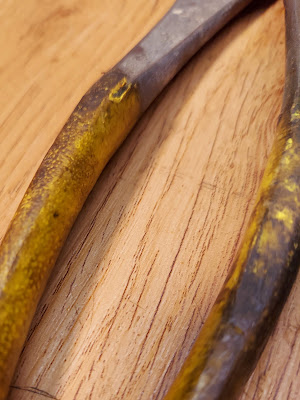
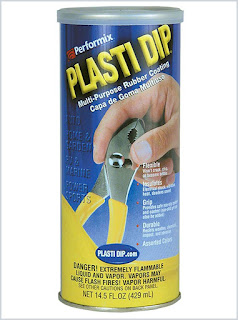
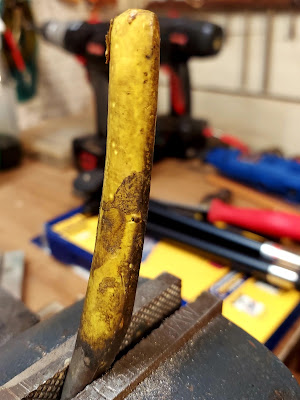
Especially the yellow handles. As soon as I saw the handles I knew they weren't original and that they were likely a liquid plastic like Plasti Dip. I've never tried the stuff but it seems there are very vocal lovers and haters! It's actually kind of finny how passionate both sides can be about such an inconsequential thing.
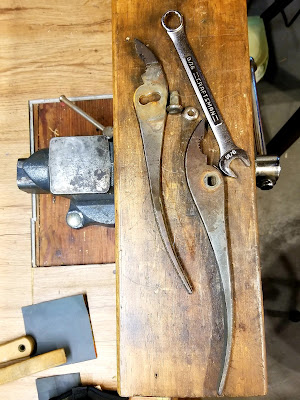
I'm getting better with the wire wheel and the bench grinder, so getting the parts to the pliers rust-free really took a grand total of maybe 7 or 8 minutes!



Thanks for stopping by!
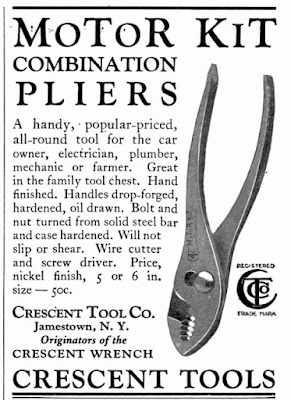
A Trademark of Crescent Tool Co.
A $1.50 flea market find leads to the history of Crescent's forgotten Cee Tee tool line, and a satisfying afternoon in the workshop.
Here's another incidental find from The Tool Box. Back in mid-October, I took a trip to The Tool Box just to see other people and other places...people and places that are not home or work. Once again, I had no agenda, there was no one item in my mind during this trip. But, quite frankly, I should - and do - know myself better: If I go to The Tool Box I'm definitely bringing something home.
Another Treasure from The Tool Box
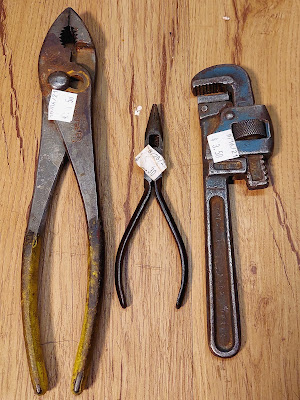
Anytime I go to The Tool Box, I pretty much make a beeline to the pliers and wrenches aisle. This move cemented the fact that I wouldn't be leaving the store empty handed. That said, the haul from mid-October included a pair of Pexto pliers, which I'll eventually get around to fixing up. I also picked up a small Trimo pipe wrench - another little project for another day.
I also picked up today's gem - a 10 inch pair of Cee Tee curved jaw, slip-joint pliers. A couple things about these pliers that caught my attention was their length and the yellow plastic on the handles.
The Story Behind the Cee Tee Name
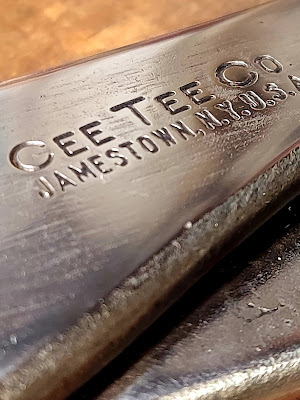
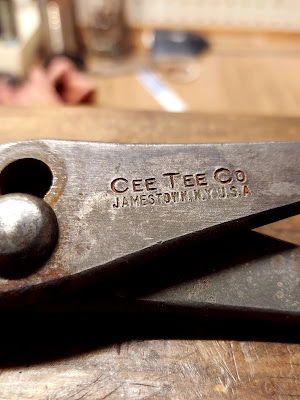
The other thing that caught my attention was that these pliers were Cee Tees! I added an exclamation point as though I knew at the time what Cee Tees were. Well, I didn't. But what I did know was the branding wasn't etched in, it was stamped in - and deep. In my amateur mind, this seems to indicated some higher level of quality. With a little research, I found out Cee Tee was a branding used by Crescent Tool Company (get it? C T..Cee Tee? Embarrassingly, it took me a minute).
The Crescent Tool Company was founded in Jamestown, New York, between Buffalo and Cleveland on the south side of Lake Erie, by Karl Peterson in 1907 after merging with the J.P. Danielson Company. This newly minted company came to be one of the famous tool makers in America.
The "Cee Tee Co" trademark was used beginning in 1913., but the best I can tell from some online research they discontinued the line sometime in the '60s. According to some conversations on tool collector sites, Crescent resurrected the Cee Tee line some years ago, although the Cee Tee tools are no longer made in America. Oh - fun note - Jamestown was the birthplace of Lucille Ball!
The Crescent Tool Company was one of the premier industries in Jamestown in the 1940s and 1950s, and in their 2004 book Jamestown, Currie and Crocker referred to this company that had been established in 1907 by Karl Peterson, a Swedish immigrant from Malmo, as “one of the crown jewels of Jamestown’s industry.” - Joan Lindquist, Jamestown Gazette
One of the things I've come to enjoy most about restoring old tools is that the restoration often begins long before I ever step into the workshop. Researching the company, digging through old catalogs, comparing trademarks, and learning where a tool fits into manufacturing history has become just as enjoyable as the wire wheel and polishing compound. By the time I actually begin cleaning a tool, I usually feel like I already know a little of its story.
Removing the Old Handle Coating
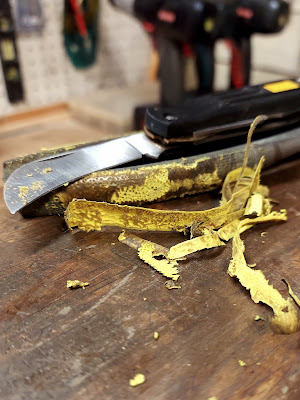
The first step was to remove the Plasti Dip. The covering was dirty and worn, to the point that even the best cleaning wouldn't save them.
One of the complaints I've read about this kind of covering is that it never really sets well and just peals right off the tool. In this case - not so. I had to scrape it off with my electricians knife
I don't know why I didn't take the pliers apart from the start, but I had sense enough to dismantle them (consisting of taking the nut off the bolt) before running the jaws through the wire wheel. No sense not making things as easy as possible!
I'm getting better with the wire wheel and the bench grinder, so getting the parts to the pliers rust-free really took a grand total of maybe 7 or 8 minutes!
Polishing the Steel
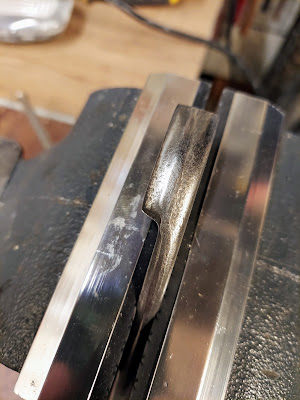
Before I got started to really shining up these pliers, I wanted to knock down the forge marks on the back of the jaws. It's not really pronounced in this picture, but it's there...
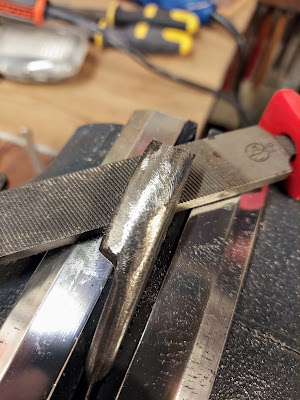
So I took a file to the forge marks, and about 5 minutes later, they were gone on both jaws...
Then it was just a matter of a few grits of sandpaper and polishing with some Flitz...
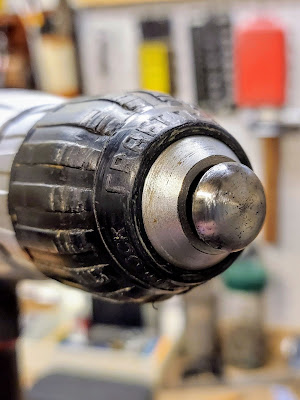
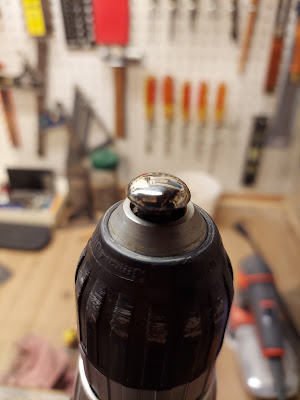
Just because of the size of the bolt that holds the halves together, and the fact that I have sausage links for fingers,

I popped it in my drill to make polishing easier...
And in literally less than 3 minutes, it was like a mirror finish:
The Finished Product
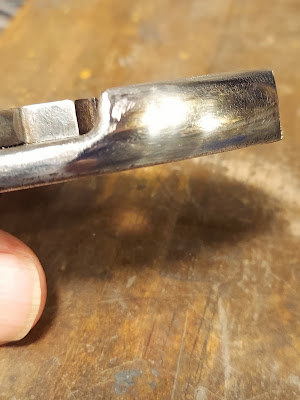
So, with all the parts shined, it was time to wrap up this little cleanup. Here's the outside of the jaw after removing the forging flash...
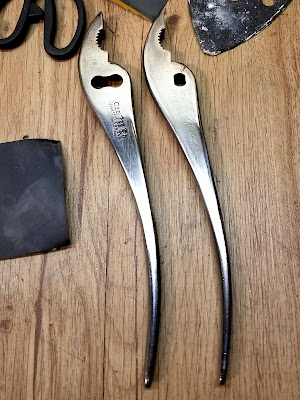
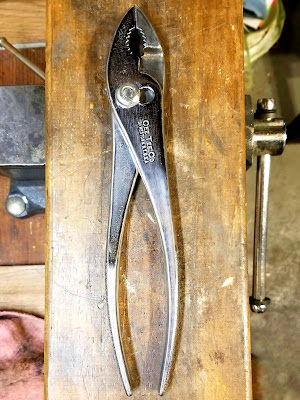
And here are the CeeTees reassembled. The sheer size of these pliers make for an excellent fit and feel in my hands. And, while they aren't exactly like new, they're darn close to new!
Crescent's Signature Grip Pattern
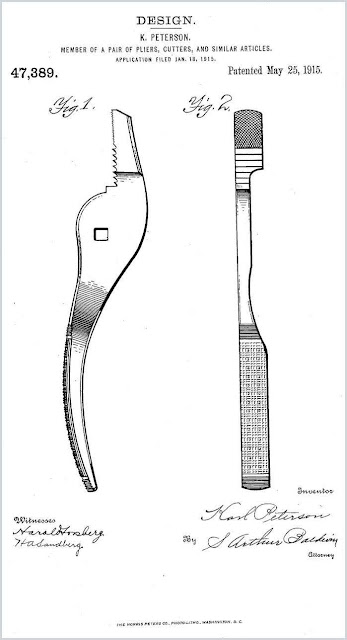
Before we go, I want to point out one of my favorite features of these pliers - the grip pattern. This was Crescent's plier handle pattern from the days when each major manufacturer had their own proprietary pattern - a kind of instant identifier. For some reason, in my mind's eye I see this pattern on pliers when I was a kid. I'll have to ask dad - if anyone has pliers with this pattern it'd be him!
And just for posterity, I found this - the patent for the grip pattern:
Their Natural Habitat
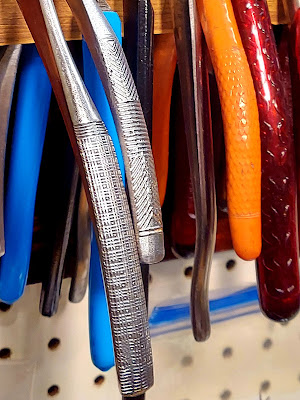
And now we have arrived at one of the goofiest patterns I've fallen into - displaying a tool in its natural habitat. That said, here are my "new" 10" Cee Tee pliers in their natural habitat:
Thanks for stopping by!
This is the kind of restoration I enjoy most because it's as much about the history as the cleanup. The detective work behind the Cee Tee name turned an ordinary pair of pliers into a piece of American toolmaking history.I especially liked the discussion of Crescent's distinctive handle pattern and the old patent drawing. Those little details give the restoration real character without overwhelming the reader.By the end, this felt like more than a $1.50 flea market find. It felt like another well-made tool had been given a second chance to do what it was built to do. - The Tool Collector
Frequently Asked Questions
Why were slip-joint pliers manufactured with removable pivot bolts instead of permanent rivets?
Early premium slip-joint pliers often used threaded pivots because they could be disassembled for cleaning, rust removal, lubrication, and repair. A removable pivot also makes restoration significantly easier while allowing worn hardware to be replaced if necessary.
Is it advisable to remove forging flash from vintage pliers?
It depends on the goal of the restoration. If the pliers are intended as users rather than collector pieces, carefully removing excess forging flash can improve comfort without affecting function. However, aggressive grinding or reshaping may reduce collector value and should be approached conservatively.
What's the safest way to remove old Plasti Dip or deteriorated rubber coatings?
Mechanical removal with a scraper or utility knife is often more predictable than chemical stripping, particularly when the coating has aged and hardened. Any remaining residue can typically be removed with a wire wheel or solvent appropriate for the coating.
Why polish only certain surfaces instead of making the entire tool mirror bright?
Highly polished gripping surfaces can actually reduce traction in the hand. Many restorers polish the exposed steel while leaving functional gripping areas with a slightly satin finish that better resists fingerprints and provides a more secure grip.
How can you estimate the age of vintage Cee Tee pliers?
Dating often relies on several clues used together: trademark style, handle pattern, forging marks, patent dates, manufacturing methods, and historical company catalogs. Because Crescent used the Cee Tee trademark over several decades, no single feature provides an exact production date.
Should vintage working pliers be lubricated after restoration?
Yes. After polishing and reassembly, a light machine oil applied to the pivot helps reduce wear, prevents corrosion, and restores smooth jaw movement. Excess oil should be wiped away to avoid attracting dust and grit.
Keywords
Cee Tee pliers, Crescent Tool Company, vintage pliers restoration, slip-joint pliers, antique hand tools, vintage tool restoration, forged pliers, Jamestown New York tools, House 173, restoring vintage tools